The running man and the pony

At New Year, I took on the care of two ponies. Both had been living on the common by my house for some months, owned by Mike, a local man who became too unwell to care for them. They are just two years old and the boy, who I call Little Bob, has one black ear and one white, curved like a yin-yang symbol. My neighbour called the filly Scrufty, a blending of scruffy and tufty, as her coat was a little matted at first. Now she is a girl of brushed flowing locks, as fluffy as a My Little Pony.

Mike had already rescued Scrufty once, as a foal, from conditions that sounded pretty grim. It explains her reticence with humans – Little Bob walks confidently over to anyone, searches their pockets for treats, leans into any hand for a scratch. Scrufty is wary, eyeing people up from behind her exuberant fringe and often walking away with an air of equine indifference. Whatever has happened in her short life has left her hesitant and I am still uncertain how much she enjoys my company. For four months now, the ponies have bookended my days on the common – they get their buckets of breakfast after the hens, but before my own; I check them again at dusk, when the song thrush sings behind my garden and the tawny owls call in the wood. Visiting the ponies has become a focal point for my night time rambles too, and often now I stand with the black and white horses a while in the moonlight and shadow.

One evening last week I spotted the Running Man crossing the common. I don’t know his name, only that he lives in a residential home for adults a mile or so away and has run or walked past my house every day for more than two decades. Over the years, I’ve watched his dark beard become speckled with grey, but we have never spoken. He will raise a hand whilst looking straight ahead, clearly uncomfortable with eye contact or speaking. This time he waved at me, a full-armed and enthusiastic gesture, and walked towards where I was standing with the ponies. I waved back, surprised at his exuberance, telling myself to be calm, to let him take the lead in our contact. ‘I have seen the horses’ he said, ‘I have seen the horses, can I touch one?’

I pointed towards Scrufty, who was nearest to him and muttered something about approaching her quietly. The tall man walked towards her, an arm held stiffly out in front, towering over the little pony. I was worried she would back off, freaked out by this sudden human in Hi-Viz and thinking I’d go over and help if I was needed. Instead, she wandered over to him slowly, sniffed the proffered hand and reached her head up to nuzzle his shoulder. A huge grin spread over the Running Man’s face and he ran his fingers through the softness beneath her long mane. I let them be, alone with whatever communication was flowing between them. Then the man turned to me, held up his hand, and said ‘thanks’. I told him he was welcome to chat to them anytime, but he had picked up speed and was gone into the dusk.

I’ve spent a lot of my life with horses – dun-coloured Zodiac, who I sat on as a child, behind the glasshouse of a market garden, Dougal, who I rode bareback in the fields by a coal yard in Scotland and Perkins, the white and gold pony I drove in a cart down Norfolk lanes for fifteen years. I used to call him my grass-powered pickup truck – one less four-by-four I would say to my friends as we bowled along the lanes to the pub. Each of them, like all horses, lived in the present moment, easily scared, but sensitive to human behaviour. Building trust with them can take time, but once won it feels like the warm depth of falling in love, my heart turning over as they follow me across a field or run their soft lips gently across my palms. I don’t know if the Running Man will visit Scrufty again, but I hope he does – both of them seemed to benefit from that moment of contact and I’d been waiting weeks for little signs that her confidence is growing.

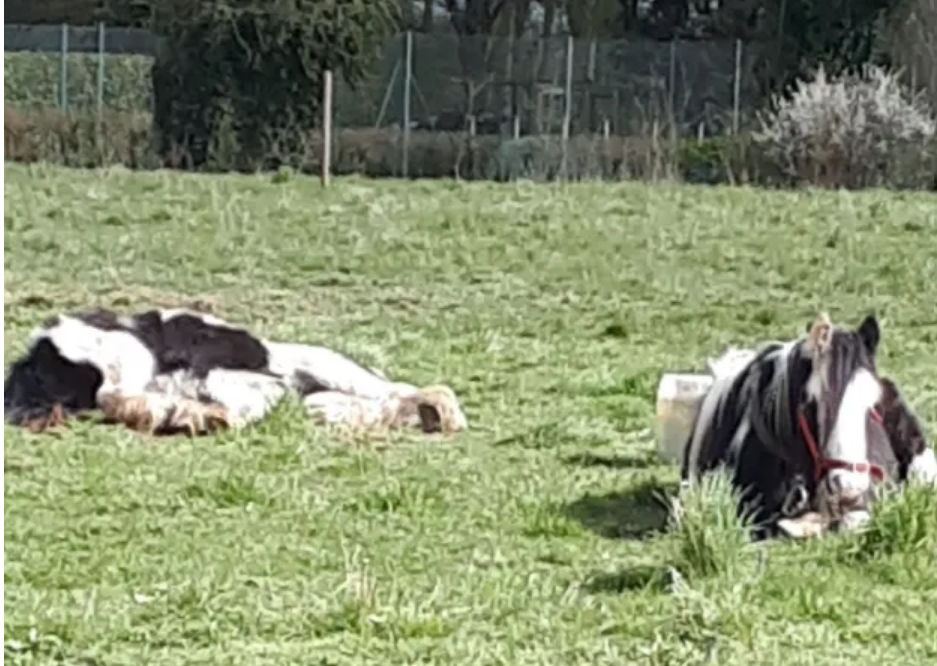
Sleepy ponies. Helen

A Common Land Year, April

Lark Rise and other ghosts

I am more than a week late writing this, it should have been penned at the end of May, but I spent a long weekend travelling to Wiltshire, losing writing time to walking on chalk downs. On the way home, I stopped to look for a ghost on Juniper Hill. It might have been more than one ghost, for although I have never visited the village, which sits on a low hill north of Oxford, it has a place in my memory. In the summer of 1989, I spent a week in hospital. The nights were hot and I struggled to sleep, so I spent most of each day and night reading. Flora Thompson’s Lark Rise to Candleford was one of the books I had taken with me. It had been recommended by college lecturer, who talked of how it recorded rural life in the decade or so before the First World War. I was intrigued when he said that Lark Rise was one of the very few books of its era written by a rural working class woman. I’ve re-read it a couple of times since that summer and the prose trips lightly along, weaving Thompson’s own story into the life of the village, its seasonal celebrations, its occasional conflicts and the poverty of her family and neighbours.

Lark Rise was name Thompson at thgave to her birthplace of Juniper Hill and, heading home from Wiltshire, I followed the long straight road to see what was there now. The lane was quiet and ran beside a cluster of houses and wide fields of oil seed rape, flowering yellow beneath a blue sky. There was no sign of any people, only cars parked behind hedges or fences – a contrast to the bustling, gossipy community depicted in Lark Rise.

The ghosts of common land haunts Thompson’s childhood. By the time she was born, the open fields and shared pastures had long been enclosed; replaced with neat hedged meadows and ploughed acres. Yet a memory of the commons lingers on. Thompson writes of her grandparent’s house, with its velvet cushions and dark carved furniture – luxuries she says they could afford because they had had common rights in their younger days. The rights meant they had kept geese and cows on the commons, as well as a donkey to pull a cart of eggs and butter and cheese into market for them to sell. Their income as servants or labourers was supplemented by the sale of these goods, so they had been better off than Thompson’s own family. Even though Flora’s father was a skilled stonemason, her parents were entirely reliant on him finding employment.

Passing through the village, I wondered at the place name too – juniper bushes like chalk downland or open moors and the edges of woodlands. Maybe the village was once surrounded by rough grazing, with patches of trees and tangled scrub. There was no sign of any juniper in the vast fields I saw on my visit, but then I barely left the car, uncertain where to park or where I could walk away from the road.

The ghosts of commons can be found in place names across England. Within a few miles of my Norfolk home there is: North Green, Bush Green, several Common Roads, Lundy Green, Blythe Green, which is no more than a few trees and a cottage at a turning in the road, Penny’s Green, The Common, now a row of houses next to wheat fields, Harris Green, Silver Green, High Common, Low Common and Cole’s Common. None of them have any common land anymore. The words ‘green’ and ‘common’ were mostly interchangeable in lowland England, once simply signalling unfenced land where people had rights. Further away there are a couple of ‘moors’, which used to mean a rough and unenclosed pasture and not necessarily a heathery hillside. I also think I can spot the outline of lost commons in a few wide verges or where a row of old cottages face onto a track that might once have crossed a common.

When I first moved here, I spent a spring and summer exploring local lanes on my bike, passing by arable fields, but finding road verges rich in wild flowers – ox-eye daisies and orchids, cowslips and lesser bird’s foot trefoil, field scabious and yellow oat grass. I wondered if these too were the ghosts of common land, once grazed and interconnected by trackways. I followed the question with research, mapped the wildflower verges close to my home and found that each one matches the location of a long ago common. Just as English bluebells on mountains or in hedgerows can show where woods used to be, so the plants of old meadows and pastures can show where the commons once were.

Driving home from Juniper Hill in a long, late evening, with the setting sun behind me, I wondered how many other lost commons remained in the places I passed. They may only survive as names, as village greens, a handful of flowers, or odd-shaped corners of ground, but their ghosts are part of how we understand the land and our relationship to it. I am cautious of nostalgia, of romanticising the past – Thompson’s book shows how hard the lives of the rural poor can be – access to commons or not. Understanding enclosure, however, helps us grasp why we are one of the most nature depleted countries in Europe, with land seen primarily as an asset for making money, regardless of the lives, human or more-than-human, who live there.

The loss of our commons as places where we interact with nature is also part of why people in Britain feel so little connection with nature. For centuries, common land was part of many people’s lives – whether they rambled and climbed trees like John Clare or kept cows like Flora Thomson’s grandparents. Commons reached into the heart of medieval towns and cities too, as places for gathering firewood and stones and keeping animals on the nights before markets. A recent study by the University of Derby calculated the loss of nature from people’s lives as around sixty percent since 1800. The decades either side of this date were the peak of the enclosure of commons, and of people needing to seek alternatives to farm work through learning skilled trades or migrating to industrial towns.

Arriving home, I walked the boundaries of the common outside my gate before sunset, thankful to my mum for registering it as common. Every time I do this, I think it is not enough. Both us and the wilder lives we live among need more spaces like this to thrive, to gather blackberries for crumbles and gorse flowers for wine, and, through valuing nature, to act as mum did and protect it. Re-connecting with nature is not just about our wellbeing, but crucial to creating a wilder, healthy world for the future, and, ultimately, to ensuring our species’ survival on this Earth.

The spectres of England’s commons have many stories to tell and I wonder, as I write these words, how many other people out there have the ghost of a common nearby – I would love to see pictures of them and hear their stories.  

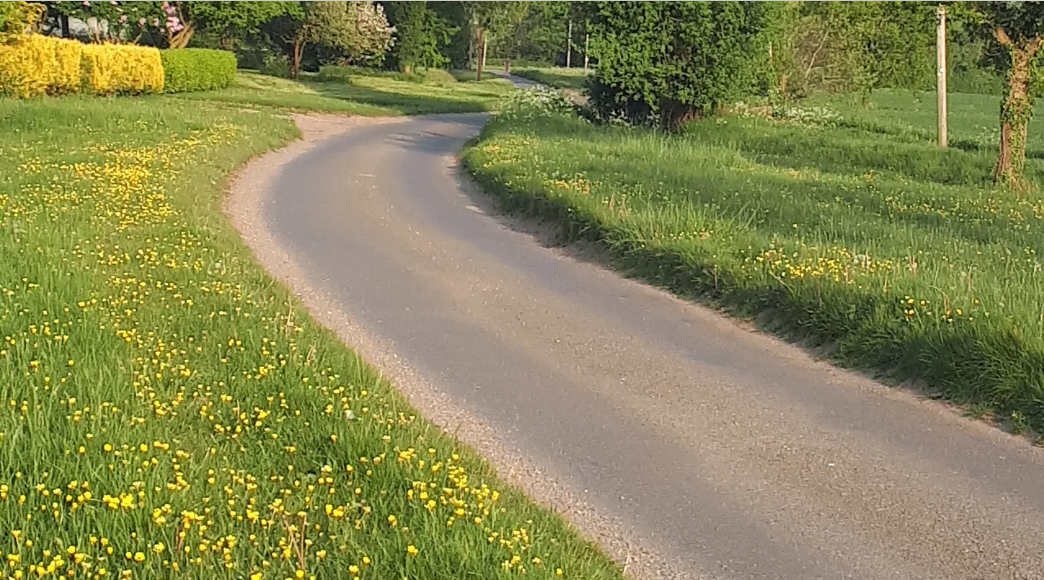
Bulbous buttercups at Shelton Spot, the ghost of a common in Norfolk. H Baczkowska

* Modelling Nature Connectedness Within Environmental Systems: Human-Nature Relationships from 1800 to 2020 and Beyond

A Common Land Year, March

At Swaddy Well

I thought about Swaddy Well all the way from Norfolk to the Northamptonshire village of Helpston. Driving across the Fens, wondered if I could find it, if it would be more than a name on a map and the memory of a place. Beneath the wide, grey skies beyond my windscreen, the reeds in the drainage ditches stood bleached by the winter. March was ending like a pacing lion, the north wind carrying a hesitant drizzle.

In Helpston, I met friends in the café attached to the museum that was once the home of the poet John Clare, who was born in the village in 1793. When we walked through the gift shop to the white-washed cottage, I was struck by the cold. No fire, just the kitchen laid out as if someone had come in from a summer garden and placed apples on the table beside slices of bread and hard, cheap cheese. A small bowl held convincing glass raspberries.

I wondered what rights Clare’s family had claimed on the commons at the edges of his parish, on Emmonsale Heath, the Mores and Swaddy Well. Maybe grazing for a pony, geese or cattle, entitlements to wood for the fire or for whittling into spoons, perhaps a right to catch fish or cut turf – all of them supplementing the living of a poor family. Common rights, like my own at Wood Green, are still often linked to the hearth of a house and are what has defined common land for centuries; no matter who owns the ground, the right holders’ access to the grass and timber should prevail.

Clare’s poem, ‘The Lament of Swaddy Well’, recounts the enclosure of a common into cropped, farmed fields and a quarry. By the time of the Norman Conquest, ‘open field’ farming existed in much of the English Midlands, with villagers having rights on common grazing land and hayfields and ‘owning’ a number of strips marked with posts in the parish’s arable fields – the origin of the term ‘stakeholder’. In 1760, a new legal process speeded up the gathering of the strips into individual farms that could be rented out or farmed for profit more than subsistence. Common rights were dissolved by this process and the pastures ploughed up, whether or not the rightholders agreed. These ‘parliamentary enclosures’ were frequently led by an individual who had acquired most of the strips in a parish and it could be carried out even if the majority of those ‘owning’ land in the village opposed the idea. The deciding factor was not the number of stakeholders who consented, but the agreement of those who owned the largest share of the land. Owning land of significant value was then the backbone of power in Britain and the required route for becoming a Justice of the Peace or a Member of Parliament – the very people who would rule on private enclosure acts laid before them by other landowners. Between 1760 and 1870, nearly seven million acres of common land in Britain were enclosed and commoners, deprived of their rights, were left with only their waged labour to live on[i]. ‘Where profit gets his clutches in’, writes Clare, ‘there’s little he will leave’.

The Lament of Swaddy Well is written from the point of view of the land as it says farewell to the Gypsies who camped among its bushes, to commoners and the wild creatures of its ‘old, green hills’. It is one of the most eloquent texts on habitat destruction in English, voicing sorrow at the obliteration of beetles ‘hiding ‘neath a stone’, flowers ‘that bloomed nowhere beside’ and the butterflies that ‘whirr and come’. I feel my voice wavering if I try to read it aloud, recognising in the words my own landscapes of loss – the chalk hill that was once Twyford Down, with its wild flowers, skylarks and bees, or the old oak trees at Skinner’s Green, on the route of the Newbury bypass. I am not surprised that Clare’s sanity collapsed as the places he knew were destroyed. Many of my road protest friends suffered breakdowns and struggled for years to find their place in the world, yet we had known those woods and valleys and rivers only briefly, whereas Clare was grappling with the destruction of the ‘mossy hills’ and ‘silver springs’ he had walked among all his life.

Despite the enclosures of commons that Clare saw in his lifetime, over a million hectares of common land remain in England and Wales today[ii]. More than a third of this area is designated as nationally important for nature conservation, a testimony to its history. The long use by right holders means that commons are not truly ‘wild’, but they have had a long time to develop peat soils, or the plants of ancient grasslands and heaths, and to be a familiar haven for generations of migrant birds. These old lands are, however, still places of conflict. My journey through Britain’s commons, currently being shaped into a book, have taken me to the burnt squares of heather on grouse moors, the enclosure of a common for military training, the industrial scale digging of peat in northern England, and the sheep-cropped turf of Welsh commons. Each of these has a story of carbon capture and climate change, flood control and the continual dwindling of nature; like the Fens that I crossed on my trip to Clare’s cottage, they are stories for another day, or for the longer pages of my book.

In Helpston, the small group of us who had met in the café braved the keen March wind and the drizzle to visit Swaddy Well. A red kite drifted over thorn scrub as we arrived and a flock of black sheep eyed us warily from a distance. The limestone cliffs of the abandoned quarry were still exposed, facing a shallow lake fringed with reeds, young birch trees and the spiky skeletons of last summer’s thistles. Wading into a pond, I found a few great crested newt eggs, tucked neatly under the leaves of a plant. In the shelter of a hut, we took turns at reading out the verses of Clare’s Lament. Tears pricked a little at my eyes and yet, there was a hopefulness in the battered land around us and in the kite, a species returning to Britain after years of persecution and near extinction. Swaddy Well, I found out, is more than a place on a map or the ghost of a common, it’s a reminder of how, with benevolent care, even the most mistreated places can find their way back to the wild.

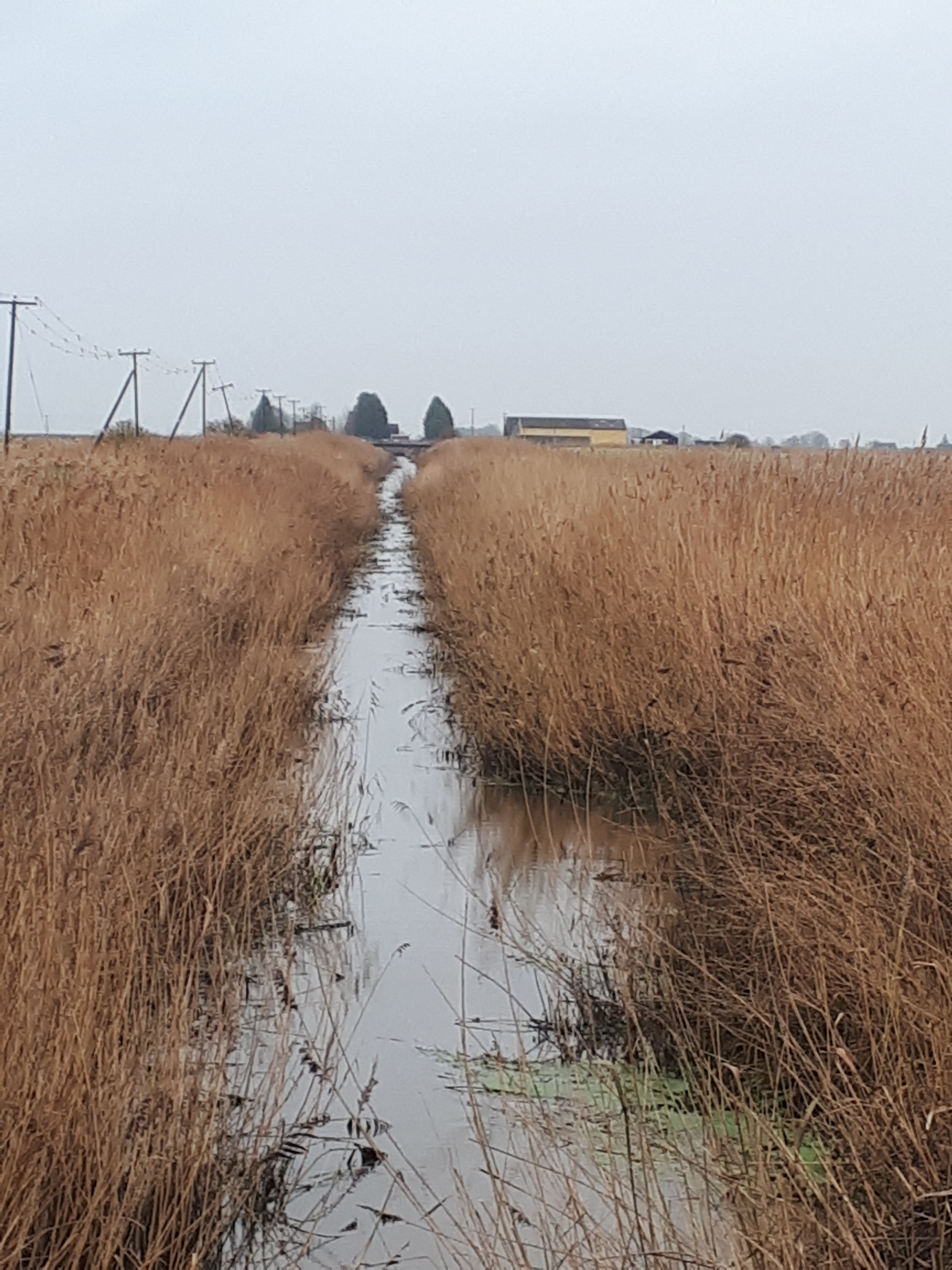
Dyke looking towards Engine Farm in The Fens; a steam pump bought at the Great Exhibition in 1851 was installed here to drain one of the last shallow lakes of the landscape. H Baczkowska


[i] A Short History of Enclosure, Simon Fairlie, The Land, https://thelandmagazine.org.uk/articles/short-history-enclosure-britain

[ii] Foundation for Common Land, https://foundationforcommonland.org.uk/

A Common Land Year, February

February Filldyke

My neighbour’s sheep escaped again this morning. I spotted them as I walked out of my gate – a small, tight flock grazing around one of the black and white ponies that I keep on the common. I was carrying a bucket of food and the little filly lifted her head when she heard my call, whinnying in reply. There was little other sound, no bird song or wind and only a whisper of rain; the still, damp air deadening the traffic noise from a nearby road. For a moment, I felt caught out of time, stranded briefly in a scene from medieval England, with just the low clouds and animals, the bare trees and short winter grass.

I texted my neighbour, telling her where her sheep were. A few centuries ago, allowing animals to stray onto the common, or grazing more animals than one’s entitlement allowed, or even putting livestock on at the wrong time of year, would have been a serious matter. If the transgressions continued, a quiet word between villagers would have escalated to a visit from the reeve or the hayward – official positions that monitored the use of common lands. Further breaches could have led to the matter being raised in the manorial court, where the lord of the manor exercised jurisdiction over his tenants and issued fines against offenders. The resources provided on common land were never a free for all, but apportioned across right holders and tightly managed. Today, beneath a sky the colour of pale fleece, I helped my neighbour herd her stray animals back into their field and we pulled wire across the gap they had pushed through.

In my childhood, in the 1970’s, traces of medieval commoning still continued in this border land between Norfolk and Suffolk. Several households in the village where I now live kept goats, flocks of geese or hens, and the occasional pony or cow on the common. Meat and milk and eggs supplemented meagre incomes earned from working on farms or in the local mill, but commoning was also a way of life. It involved rising in the morning to feed and care for the animals, standing whilst a whiskery nose nuzzled at a pocket, searching for treats, passing a hand across warm flanks and checking animals by torchlight on dark winter nights. For a couple of decades, the numbers of people using local commons this way were swelled by those who moved here seeking the good life. Disciples of John Seymours’ ‘Complete Guide to Self-Sufficiency’ moved to South Norfolk or North Suffolk in the 1970s and made use of the commons beyond their organic vegetable plots. Writer Roger Deakin lived beside a common a few miles from me and was part of the bohemian community that sprung up either side of the river Waveney. They had a dedicated newspaper, the Waveney Clarion, and held summer festivals of music, storytelling and crafts that intentionally evoked the fayres held on the commons of feudal England.

Over the past two years, I have visited dozens of British commons as research for my book, ‘Common Place’. Yet I found only one or two other people who, like me, are not farmers, but use their common as a source of firewood and grazing, working the land the in the way of the long-ago commoners. Sometimes I feel I am among the last of a breed whose origins are older than the Norman Conquest. Almost all of the commons I have visited, from England’s lowlands to the bare and sheep-shorn commons of Britain’s hills, were grazed by commercial livestock farmers or as part of nature conservation efforts. At Greenham Common, near Newbury in Berkshire, a representative of the local Wildlife Trust, who manage the common, told me that most of the cattle on the land are part of large farming businesses now, often leasing or borrowing rights from local commoners. He said that it was hard to know, sometimes, who owned certain cows, or how many had been loosed onto the wide grassland and heath of the common. No wonder, I thought, that the common lands of old had their wardens and courts – commons have a slippery history.

Greenham Common has slid out the public eye in recent decades, but in the 1980s it was a totem of a bleak decade. Several times my mum left our home in the Midlands and travelled to join demonstrations at the women’s peace camp on the edge of the common. The camp had grown up in response to a new generation of nuclear weapons, housed at the American airbase that had been built there in World War Two. The missiles were part of Cold War hostilities with the USSR and located at Greenham as part of a strategy where each side ramped up their weaponry and threatened annihilation. It was known as Mutually Assured Destruction and the acronym speaks for itself.

A decade after my mum’s trips to Greenham, I lived on the other side of Newbury for most of a year, protesting against the town’s bypass. My memory of that time is of always feeling tired, of rising at dawn to block vehicles that carried chainsaw crews or security guards into the woods along the route of the road, of building walkways and treehouses high up in the branches, of clinging to them as yet another bailiff tried to pull us out, of arrests and court and the sound of two hundred year old oaks crashing to the ground, one after another. The trauma and fatigue of those months left my memory in fragments, but also brought me back to my grandmother’s cottage in rural Norfolk. It was empty at the time and seemed a good place to rest for a while. I didn’t plan to still be here, thirty winters later, helping herd sheep on a February morning.

Unlike the reeves and the haywards of old, I am not worried about my neighbour’s sheep eating the grass on the common. My only concern is for dogs, for the main use of the common now is dog walking and people view the open space as a place to let their pets run free – enjoyable for the dogs, but less so for sheep. The grass itself is plentiful and has kept growing all through this mild winter; this is the norm now, when there is barely a full week of frost in a winter and snow is a rarity. February is, however, living up to its old name of ‘Filldyke’ this year, both on the common, with its hollows and ponds, and in ditches and fields that surround it. Once or twice a week now I have to move the ponies in their temporary fence, avoiding the wettest parts of the common.

Keeping animals on this land has given me a deep understanding of the hollows and the dry ground where the gorse bushes grow, of what plants edge the ponds in the spring and where to find shelter from the east winds of winter. Yet I don’t ‘own’ this place any more than the dog walkers do; it no more ‘belongs’ to me than it does to those who ride their bikes along the rough tracks, who build lean-to dens in the little wood, who camp here in summer or leave memorials to their loved ones below the trees. The other commoners I’ve met on my travels, even those with large flocks of cattle or sheep, have talked about the same connection with their commons, one that is built not on ownership, but on family history, on rights to use the land and a familiarity with all of the lives that live there. Today, walking back home with an empty bucket in my hand, I heard a song thrush warming his voice up for spring, watched the last of the starlings leave their roost in the reeds of a pond and spotted the neat hoofprint of a roe deer, left overnight in the mud. Each of them made me aware, once again, of how many of us value the quiet space of Britain’s common land.

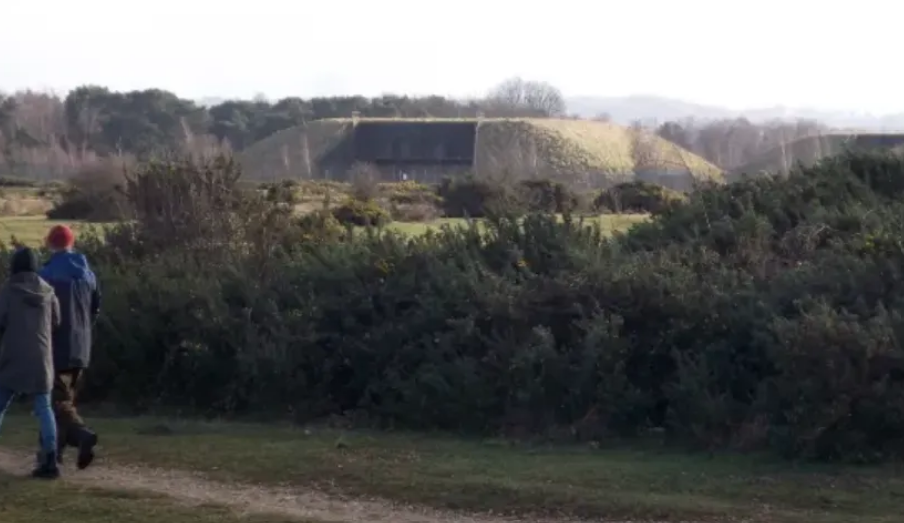
Silo, Greenham Common, Helen Baczkowska

A Common Land Year

January

I’m writing about common land. I have enough words for a book now, one that wanders from rain-soaked Cumbria to meetings on Dartmoor, via Gypsy horses in Scotland and herbalists in Wales. Words that return, always, to the common outside my front door. It is a place I have known all my life, sixteen acres of tussocky grassland, scrub, gnarled oak trees and ponds that come and go with the rainfall and seasons. It is a land that has shaped my life too; identifying wild flowers here as a child led to me training as an ecologist and, as I became more aware of the threats to the wild, to me becoming an environmental activist. The commoners that were here in my childhood kept goats, donkeys, ponies and a cow on the rough grazing, whilst their gardens were busy with hens and vegetables and firewood piles. They too inspired my dreams, instilling a desire to live quietly and meet my own needs where I can.

I am writing about common land in Britain today. When I say this, I get one of several responses. Some people are excited and we veer into rambling conversations full of enthusiasm for vegetable gardens and coppice woods. Others tell me all that they know about commons, and a subset of them embark on long rants about enclosure, even though I say I am writing about the present more than the past. I have learned that my role here is to listen, rather than to converse. My favourites are the people who tell me about ‘their’ commons, the places close to their hearts, where they walk, work, graze animals or simply enjoy a landscape that feels rooted in history and nature.

I like to start conversations about commons with a question – ‘what do you understand ‘common land’ to be?’ The answers are varied, with many believing that the land is un-owned, or owned ‘by everyone’ or ‘the people’. I am the buster of common land myths and tell them that are two answers to my query. Firstly, since the 1960s, common land and common rights are defined by registers held by local authorities. If the land does not have an entry in the typescript ledgers and an accompanying, hand-drawn map, it may once have been a common, but it is not now legally one. Secondly, in the past, common land was simply land owned by someone, but over which other people] had rights. Either way, there are usually owners in the form of local farms, estates, local authorities or conservation groups. Wood Green, the common on my doorstep, is registered, along with my rights for grazing animals. On other commons there are entitlements for cutting peat for fuel, coppicing or pollarding firewood, grazing pigs in the oak and beech mast season, for fishing and for digging up road stones.

Once there was common land everywhere, reaching into cities, surrounding villages and towns. Thousands of acres of moor and fen, heath and forest, and rough grass and scrub like my home ground. Over hundreds of years it was enclosed into privately owned fields, concentrating property into the male lineage of country squires and landed gentry. I’ve spent a long time reading the reasons why enclosure happened and about the consequences on communities and ecology. Those are for my book, or perhaps for later posts in my common land year. I’ve also hunted out where commons hide in plain sight in old paintings and English literature – they are there in the novels of Jane Austen, Thomas Hardy and Charles Dickens; they are in the paintings of Gainsborough and Constable and in the poems of John Clare, who recorded the enclosure of his village commons in the early nineteenth century.

Clare has been a companion of mine since my teens, when my mum came back from an evening class carrying a book of his poems and clearly in love with the words of the long-dead farm labourer from Northamptonshire. Like Clare, I have seen places I loved destroyed, this time for road-building – a chalk hill called Twyford Down, an old heathy common in the path of the Newbury bypass and a small fragment of old common in north-east London. ‘Enclosure like a Bonaparte let not a thing remain’, wrote Clare in his poem Remembrances. ‘It levelled every bush and tree and levelled every hill’, he continues, and when I read his words, there are tears in my eyes for the lands that both of us lost.

Today, in early January, the ice and snow on the common melted. I carried water and hay out to the ponies that live there, feeling their warm breath on my hands as they searched for treats. Despite the thaw, the ground seems dry, the ponds barely topped up after nearly two years of scant rain. It scares me, this changing and uncertain climate, the questions of ‘what if’. What if the ponds are not full enough for the frogs and the newts and the shy dabchicks who breed here in spring? What if there is barely enough rain for the wild flowers to bloom and if the trees shrink into themselves, as they did last year, shedding limbs and barely growing? What if there are not enough flying insects for the swallows or swifts and the birds fail to return in the first weeks of summer? My love of this common isn’t easy, most days I find some solace in these quiet, but to love a half-wild place is to fear for its future.

I have more than enough words for a book now, they are almost all lined up and seeking a publisher. Yet more keep coming, as if my business with common land is not finished, so these posts will be outtakes that don’t make it to the book, reflecting the commons I visit this year and the people, histories and wildlife I find on them. I am not sure where I am going next. I’ll let you know.

The Raven and the Coal Mine

Memories of a week spent squatting land scheduled to be Britain’s first new coal mine for decades. Edited edition first published by https://mckenzieriver.org

A solitary raven has flown over my tent every morning this week. Most days I have heard the prrr-ruk call before seeing the bird’s silhouette, with its fingered wings and wedge-shaped tail. Eastwards, behind it, I’ve watched the sun rise over the mountains of the Lake District, whilst to west the Solway Firth still holds on to darkness and a few fading stars. Below the raven, my green tent nestles on waste ground between a housing estate and red-brown rocks that tumble down the sea. This week I am one of maybe two hundred environmental activists squatting land where England’s newest coal mine for decades is planned. A selection of banners, reading ‘leave it in the ground’ and ‘no new fossil fuels’, hang from our marquees, from the outdoor kitchen and our portable, composting toilets.

To the Vikings who settled north-west England, ravens were the birds of Odin, the all-father of their gods. Odin had two of the coal-black birds as companions and called them Thought and Memory; he also gave one of his eyes in exchange for knowledge of the future, and was forever troubled by what he learnt. In the here and now, when I arrived at this field by the sea, I was warned not to eat the blackberries that grow here. Underneath us are the foundations of a chemical works once infamous for the waste it leached into the sea as it produced detergents, phosphates and sulphuric acid. On top of the factory footings are years of landfill, covered over with concrete and topsoil. The brambles look innocent enough, scrambling across the broken tarmac and cement, their fruit turning from red into purple in the late summer sun. But the plants can reach their roots deep down into whatever lies beneath us and draw up the long-buried toxins. Above ground, the tangled stems mingle with low bushes of goat willow, the thistle-like flowers of knapweed, drifts of white yarrow, purple selfheal, zig-zag clover, tiny yellow bird’s foot trefoil, feral sedums and garden mint that scents the air as I walk across the site. A comma butterfly, orange wings against the green plants, searches for nectar among the flowers; someone tells me there are adders here and at night I hear tawny owls calling across the derelict ground.

The land is supposed to be private, but the fencing has been ripped open or rusted into holes and the remains of gate hinges swing empty on their posts. Every day, local children cycle past on the tracks that cross the site. I am aware that we have landed in their space, pitching our tents on their common ground, where they explore the wild edges of their town and themselves. They are curious, occasionally insulting and dare each other to speak with us. ‘Why have you all got manky hair?’ asks a stocky lad in shorts and a blue football shirt. He has a point, I think, as we emerge from our sleeping bags in the morning and head to the kitchen to find tea. We look unbrushed and scruffy, wrapped in layers against the chill breeze from the sea. Despite the taunts, a couple of protesters helped the children to dismantle discarded pallets and to make ramps for their skateboards and bikes. This afternoon I bought a couple of boys a few slices of just-baked vegan cake from the kitchen. They eyed it nervously and then smiled, nodding with satisfaction when they recognised the familiar tastes of chocolate and sugar.

In the evenings, local men and occasionally women walk their dogs among the bushes. Those who stop to chat are friendly, but say that the nearby town of Whitehaven needs the five hundred or so jobs that the coal mine will bring. On the main street there are boarded up shops and, mounted on a plinth like a memorial, an old wheel from the Haig colliery tower. When it closed in 1986, three and a half thousand jobs were shut down with it. I tell the men I understand and that I grew up in mining communities in the English Midlands. As we talk I remember how my teenage mates were frequently stopped at police roadblocks during the 1984 to ‘85 Miners’ Strike and how fifty or more riot vans at a time would line up on our village street on their way to the picket lines. The men of my mum’s family had been miners, I say, with blue-black grit engrained in the scars on their hands. She spoke of ancestors killed in underground fires and the dark coal dust her Grampa coughed up in his old age. During the Strike, boxes of food and children’s clothing would be piled on our kitchen floor on the way to the Miner’s Welfare.

I left home a year later, returning to see poverty creeping into the villages and towns, shutting down the shops and changing the way people walked. Unemployment has a listless shuffle, mingled with a kicking rage. I know there is nostalgia in the memories that the men and I share; it is not just the jobs, but the lost sense of a shared experience, and pride in hard and difficult work that for nearly two hundred years powered the furnaces of the industrialised world. Our conversations end with agreements, usually as I bend to gently tug a dog’s soft ear – yes, there should have been investment into these communities decades ago and, yes again, the current government is a shambles. I am trying to build bridges with the community that we have set up camp in, so I don’t mention what I am thinking – in a time of rising temperatures and seas, with accelerating rates of extinction, our current worries might soon be completely eclipsed. Like Odin, my days are troubled by visions of the future.

One afternoon there is a presentation about the proposed pit. The speakers are in a white marquee and we sit around them on the ground. I pick at a ribwort plantain leaf. Normally I would tell other people about how this plant can help heal our skin and is better than dock leaves for stings or insect bites. Today I remind myself to wash my hands as soon as I can, just in case it too has pulled up poison from the earth. For a moment I wonder how we broke our relationship with a small, useful plant and all of the wild lives of this Earth, and I have to remember to concentrate on the details of the new pit. Permission to build it was granted just a few weeks before, although there is still a possible legal challenge. Someone says that most of the coal will be shipped overseas for making steel. European steel works, the speakers say, are moving to cleaner, lower-carbon methods of manufacture and see coking-coal as an old and dirty technology now. There is a long discussion on how extracting this coal will ruin Britain’s commitments on carbon reduction and how the site will be fully automated, with no men underground, just machines, boring away beneath the sea bed. The world has moved on since the Haig pit and those around my home village were closed. The old days of the rattling winding gear and the pit-head camaraderie will never come back.

When I left the marquee, a warm smell of spices drifted across the camp. The evening meal would be served soon and already people were gathering with bowls and spoons in their hands. I wandered off, looking across the low bushes, grassland and decaying tarmac towards the sea. In this moment, I felt a sudden sadness for this unkempt place, where the wildness is creeping in and local people walk or play. The speakers in the marquee had said that the toxic waste and soil below our feet would be excavated and taken somewhere (no one is sure where), to make room for the buildings, haulage roads and machines of the colliery. The willows, flowers and brambles would be rooted up, the bees and the butterflies, adders and tawny owls chased away by the noise and construction work, all inconsequential in the face of trade deals and global markets. It feels to me like a kind of madness has gripped those of my species who think that any of this makes sense.

Standing on the cliff above the sea, I listen to the kee-kee of jackdaws flying to their evening roost. I watch the glinting wings of goldfinches and the dip and rise of the murmuration of starlings that gathers here at dusk. I have spent some of the last thirty years of my life blockading bulldozers and squatting houses or trees in the path of road building, quarries or airports. Yet I still have no real answers to the seemingly impossible balance between livelihoods and the rising waters, rising temperatures and growing rates of extinction. Watching the settling birds, I give myself permission to admit this uncertainty and still be here, witnessing the land, speaking aloud the names of the bird’s foot trefoil and brambles, carder bees and comma, starlings, goldfinches and jackdaws. After three decades, saying the names of the wild, acknowledging their lives, feels like the only thing that I know. As I turn and walk back towards the tents, the nearby street lights flick on in a long line. In an hour or so a full moon will rise behind the mountains, a fire will be lit in the heart of the camp and a night of songs and stories will begin. In the last moment before sunset, I hear again the deep, slow call of ravens, the birds of memory and thought.

On being asked to write about the future

December 2023

Always, for me, this question makes me think about land. Who owns it, who lives on it, how we listen to the stories it tells. How we stop imposing our own will upon the Earth. I’ll acknowledge this is my own obsession, born of a childhood love of plants, frogs, newts, grass snakes and hares; of a fascination with yellowhammers on the edges of wheat fields and of the shifting seasonal wonder of redwings and swallows. A child, I was drawn to the washed up sadness of starfish and I still search rock pools for anemones, opening their scarlet tentacles at the point where the tides change. Questions about the future make me think of rock and soil, forest, mountain, river and farm. Part of my answer is an understanding that those who control the land govern so many aspects of our lives.

As an ecologist, I have spent years surveying wildlife, reading a place through its plants: nettles and docks tell of rich and once-disturbed soil; harebells, delicate as bees’ wings and the colour of a high, summer sky, speak of dry, sandy soils and maybe, once, grazing by sheep. On mountainsides, bracken and bluebells are the shadows of where woodlands once grew. All of these I map and photograph and note down. Back at my desk, I check what I have found against old maps of tithes and the enclosures of common land. Aerial images taken just after the Second World War show where, not long ago, there were small fields divided by hedges and trees. Now there may be houses or roads and hedgeless acres of crops. Every place has a story and often it is one of loss. A slow, quiet, genocide of the wild.

Set against this past, the future seems straightforward: put back the woods and the hedges and meadows, let the wildness back into rivers and mountains. Return least some of the commons, so that people can supplement their incomes with food or fuel, willows for making baskets, nettle for string or strong, green fabric. Grow food to feed people not profits, without spreading poisons or wastes on the land, in the air and into water. It’s the old dream that William Cobbett wrote of, after his rides across Georgian England. A vision picked up by John Seymour in the 1970s. I bought my copy of his ‘Complete Guide to Self Sufficiency’ in the 1980s, when I was twenty. Friends and I took a train from London to Machynlleth and walked three miles out of town to the Centre for Alternative Technology. I came away thinking of wind turbines and raised vegetable beds, of shared bread and rhubarb wine, horses on the land, hens in the yard and dark soil beneath my nails.

I don’t know how to get there from here. Working for a world with a future has been so much harder than I imagined at twenty. Especially today, writing in a library at dusk, as the festive lights come on beyond the windows. It’s busy out there, despite the rain. All that shopping, I think, and the belief it brings happiness, when it is part of what is killing the lives of this world. This winter, as so often before, I turn in on myself to survive. I have been taking long walks alone in quiet places, avoiding towns and social situations, writing while wrapped in a blanket, hearing the hens calling from my garden. As a friend of mine says ‘that which does not kill you gives you terrible coping mechanisms’.

With thanks to Rebecca Stonehill & Norwich Writer’s Rebel

Extracts from ‘Along the River’

The following extracts are my contribution to a collaborative project that charts the course of the river Wensum as it flows across Norfolk. Writers including Nick Acheson, Caroline Davidson and Jos Phillips contributed work on history, personal memories and nature from the source of the river to its merging with the river Yare east of Norwich. The final piece formed part of a publication sold in aid of the campaign to stop the Norwich Western Link Road. For more on the campaign, visit https://www.stopthewensumlink.co.uk.

All illustrations by Kate Baczkowska

Bintree

A borrowed moment, tucked in between my work and my daughter’s college timetable. Just the two of us today. At seventeen, she has the luminous beauty of youth: dark eyes, a tangle of red hair and a sense of the romantic that makes her say, ‘here. This is where we should stop’.

Here is a strip of grass between the river and a lane so quiet that no traffic will disturb us. Its an adolescent river at this point, not far from its source and in a hurry to be somewhere else. Green streamers of weed move restlessly with the current and yellow water lilies float on the surface – their flowers the only hint of sunshine in an afternoon that smells of soil and grass after rain. Sitting on my coat, I make tea in a flask and we drink it strong and black from tin cups, sharing a tub of sunflower seeds, dried fruit and bitter, dark chocolate.

‘Remember the otter?’ Kate asks.

A few months before, we’d been swimming in another Norfolk river and were letting the warm sun dry us as our feet still dangled in the water. A soundless change in the ripples of the river caught our eyes and a large otter came close, trod water for a moment and watched us, quizzical and unafraid.  It left without breaking the surface of the river, more water than muscle and flesh, so at home in its place I was left feeling a splashing and clumsy intruder.

I’m tempted to slip into the cool caress of the river today. It’s not just the cold that stops me. A recent report has shown how England’s rivers are contaminated by sewage and chemicals from farming: the water in front of me looks clear, but what it carries, unseen, is in question.  Once, millennia ago, the people of these islands left offerings of bronze and gold in their rivers, swords and shields and daggers laid in the shallows like a prayer. Now we see them as drains to take what we do not want out to sea as fast as the waters can flow. What will it take, I think as we leave, what will take to once again honour the life and the lives of our rivers? I don’t have a bronze dagger to offer, only a fragile hope that things can change and handful of sunflower seeds. We scatter the seeds on the bank and smile as a robin darts towards them.

Deal Ground

Metal gates, padlocked across a track between empty buildings. Sparse words and a fresh, neon pineapple scribbled on red bricks and boarded up windows. This time, I cannot get in.

Years ago, a council official opened the gates and left me alone to survey the marsh between two rivers: the Yare to the south and the Wensum to the north. I walked to where the land ran out, mapping willow scrub and reeds, stumbling on tussocks and hidden ditches scented with water mint. A muntjac had scuttled for cover and I’d looked for otter spraint beside the Wensum.

On the river bank, more derelict buildings mark the Deal Ground, where once boats brought cheap pine or ‘deal’ to make crates for the nearby factories. A ghost-name, a reminder that the river once carried the wealth of the city: shoes, spices and mustard, flour, wool, coal and steel; wood to be sold on Timber Hill and madder plants for the Madder Market. Dye from the tiny flowers once leached from a textile factory in the city and stained the Wensum as scarlet as blood.

Soon the ruined sheds will be replaced with houses and apartments. Their views will be expensive, across a marsh protected and re-branded as a nature reserve. The latest plans show the houses raised above the increasingly likelihood of floods. Leaving the locked gates, I wonder about those plans and if building on stilts will be sufficient; enough to survive the changes humanity has wrought on the water and tides.

Home Ground

My home is built both on and of common land; two hundred summers ago, the walls of a row of cottages were raised, here on the southern edge of this patch of Norfolk common. Only houses for the poor of the parish could be built on commons and the original copper-plate deeds of my house record it as one of a row of paupers cottages. The medieval boundary ditch still runs along the back of the gardens, as deep as a man is tall.

The walls were made from clay and straw and dung, trampled by oxen, formed into rough blocks five times the size of a house brick and dried, pale and hard, in the sun.  The pit they were dug from is just a few metres out from the front of the house and now a pond with reeds and newts and a winter’s murmuration of starlings.

cropped-cropped-dscf12771.jpg
Sheep grazing on Wood Green common, Norfolk

The chimney of the house rises unevenly through the two original rooms, one up, one down.  The fireplace is for more than the warming of dark, cold evenings; for tradition dictates that rights to the common are attached to the hearth of the house. These rights turn the common into land that is no one person’s and land that in some ways is everyone’s: they give it the oldest, original definition of common land (land over which a person has a right of common), they restrict what the owner, the “Lord of the Manor”, can do with it (nothing that interferes with the rights) and since the year 2000, open it up for all to access.

Across Britain, each of these elements of common land has been hard won over decades: the right of access, the right to the products of the common, the limiting of the landowner’s powers.

That struggle is more than our history, it is also our present.  As I travel the common lands of Britain, I record not only the on-going fight for our commons, but the wonder that is common land, the wildness, the people whose lives centre around them and the new ways that communities are seeking to bring back the ethos of land held in common.

Beyond the Shingle Bank/Walking from Cley

Walking from Cley,

from the cobbled clutch of cottages,

jackdaw chattered,

with reedcutters loading a lorry, shouting, across the peat brown river.

Tearooms shut with apologies, tight against cold March.


Along the seaward-running bank, dense alexanders, Smyrnium olustram,

Macedonian parsley, bright stalks glimmering promises of flavoured sauces,

succulent as asparagus, a cure for snake bite, but bitter as myrrh

and now, officially, invading.

Dark seeds spreading in fistfuls.  Fast, unloved, chancing the dry, bare soil.


Walking where the salt streams run, the wind barely whispers the reeds,

the shelduck slip in silence, half-hidden in low-tide banks,

curlews coloured to mud, oystercatchers, calling, calling

and skylarks rising landward, from pale and cattle-short pasture.

Two egrets, Egretta garzetta, hunched in a silt brown pool,

white and thin as moonlight, exotic and slipping northwards, almost unnoticed.


Walking eastwards, a slide and hollow footfall on the heaped and shingle bank,

wave worn it yields a scatter, a shatter of broken, pebbled concrete

and the gradual, darkening rust of Second World War defences;

the hulk of pill-boxes, gravel full, sheltered by flowers of gorse and tiny buck’s horn plantain,

crouched to the marsh and the stone beach’s sudden rise from deep grey water,

an easy, too easy, landing; the ghost of the fear of what might have been.


Landwards here, pink footed geese, Anser brachyrhynchus,

wings dropped to land in formation, over the freshwater marsh.

Blow-ins from Iceland, here for the brief span of winter.


Walking where the shingle bank dips and curves, ripped out by storm and tide,

a drift of pebbles inland, grasping the edges of fields,

the bank buys time, buys time, whilst away on the edge of The Fens,

the Environment Agency and their allies re-trench, manage their retreat,

create for the birds, new reedbeds, water scrapes, pools,

beyond the predicted slow sea’s rising.


Walking between the shingle bank and the passing winter’s pebble ridge,

shining from ebbing waves, a tide line set with razor shells, starfish tragic husks

and slipper shells, Crepidula fornicata, cupped like the hold of my palm,

Beneath, the always surprise of the white half-shell

and knowing the damage they leave on pearl-bright oyster beds.


Halfway to Salthouse a barn owl, soft as a moth, over the hush of the reeds.

Walking inland at Muckleburgh, leaving the sea and the wartime wireless station,

squatting square and staring blankly.

Walking back to Cley on the deserted dusk of lanes,

hawthorns bent to the salt and sharp breeze from the sea,

the sky edge darkening over uneven hills the glaciers left.

In the village the reedcutter’s truck stands quiet,

the church, as broad as cathedrals, bears unspoken witness to the footprint of lost docks,

where Hanseatic merchants traded tar and timber, fish and fur and flax,

barley from the fields along the flowing Glaven, oats and rich dark malt,

a wealth of wool from heaths behind the town.

Until the unseen silt, softly filled the harbour, shallow, falling silent, quiet as back waters now.

Until.