A Common Land Year, March

At Swaddy Well

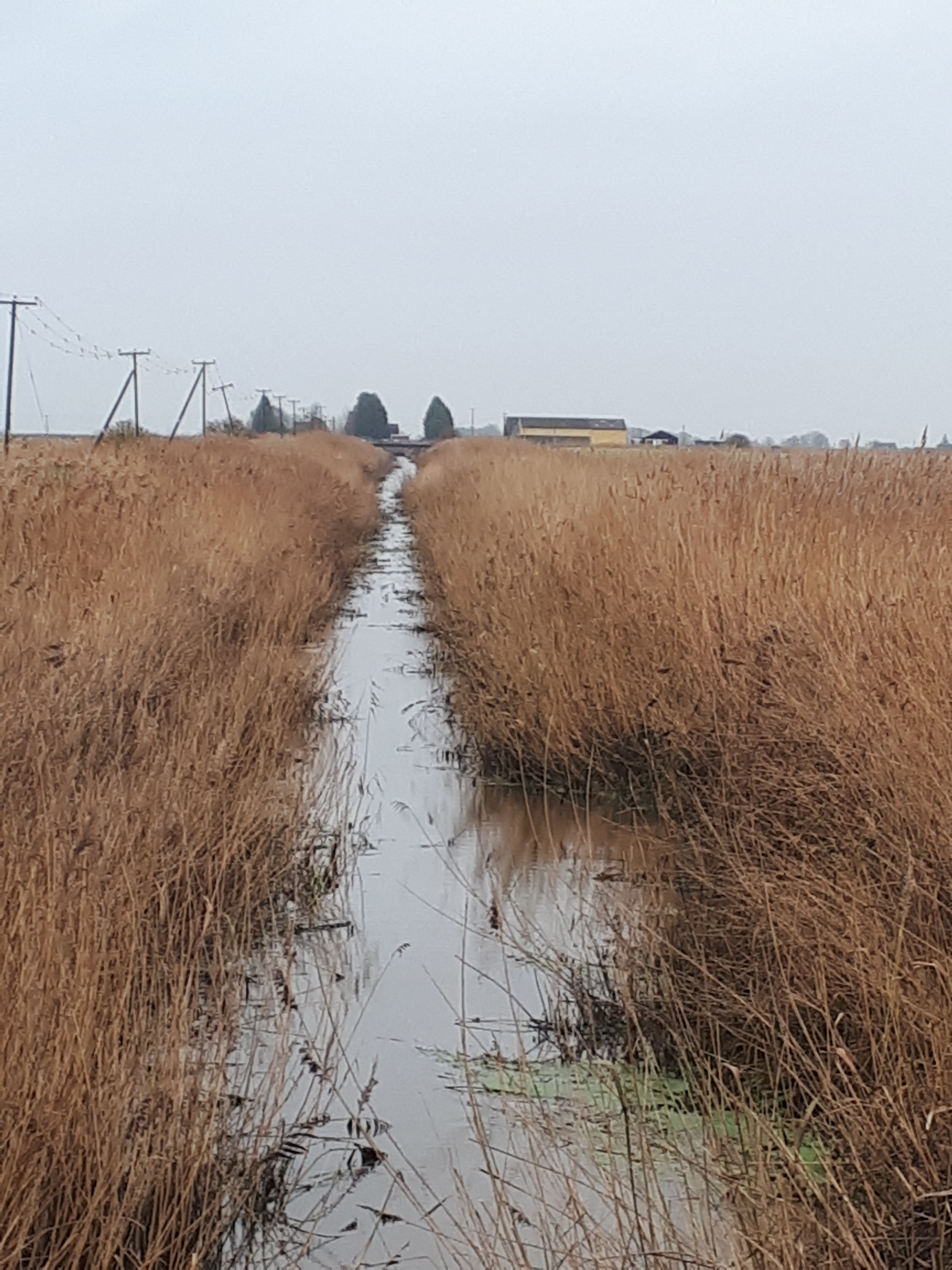
I thought about Swaddy Well all the way from Norfolk to the Northamptonshire village of Helpston. Driving across the Fens, wondered if I could find it, if it would be more than a name on a map and the memory of a place. Beneath the wide, grey skies beyond my windscreen, the reeds in the drainage ditches stood bleached by the winter. March was ending like a pacing lion, the north wind carrying a hesitant drizzle.

In Helpston, I met friends in the café attached to the museum that was once the home of the poet John Clare, who was born in the village in 1793. When we walked through the gift shop to the white-washed cottage, I was struck by the cold. No fire, just the kitchen laid out as if someone had come in from a summer garden and placed apples on the table beside slices of bread and hard, cheap cheese. A small bowl held convincing glass raspberries.

I wondered what rights Clare’s family had claimed on the commons at the edges of his parish, on Emmonsale Heath, the Mores and Swaddy Well. Maybe grazing for a pony, geese or cattle, entitlements to wood for the fire or for whittling into spoons, perhaps a right to catch fish or cut turf – all of them supplementing the living of a poor family. Common rights, like my own at Wood Green, are still often linked to the hearth of a house and are what has defined common land for centuries; no matter who owns the ground, the right holders’ access to the grass and timber should prevail.

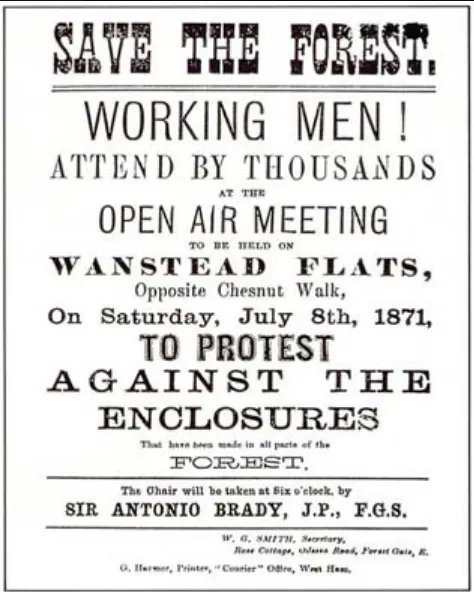
Clare’s poem, ‘The Lament of Swaddy Well’, recounts the enclosure of a common into cropped, farmed fields and a quarry. By the time of the Norman Conquest, ‘open field’ farming existed in much of the English Midlands, with villagers having rights on common grazing land and hayfields and ‘owning’ a number of strips marked with posts in the parish’s arable fields – the origin of the term ‘stakeholder’. In 1760, a new legal process speeded up the gathering of the strips into individual farms that could be rented out or farmed for profit more than subsistence. Common rights were dissolved by this process and the pastures ploughed up, whether or not the rightholders agreed. These ‘parliamentary enclosures’ were frequently led by an individual who had acquired most of the strips in a parish and it could be carried out even if the majority of those ‘owning’ land in the village opposed the idea. The deciding factor was not the number of stakeholders who consented, but the agreement of those who owned the largest share of the land. Owning land of significant value was then the backbone of power in Britain and the required route for becoming a Justice of the Peace or a Member of Parliament – the very people who would rule on private enclosure acts laid before them by other landowners. Between 1760 and 1870, nearly seven million acres of common land in Britain were enclosed and commoners, deprived of their rights, were left with only their waged labour to live on[i]. ‘Where profit gets his clutches in’, writes Clare, ‘there’s little he will leave’.

The Lament of Swaddy Well is written from the point of view of the land as it says farewell to the Gypsies who camped among its bushes, to commoners and the wild creatures of its ‘old, green hills’. It is one of the most eloquent texts on habitat destruction in English, voicing sorrow at the obliteration of beetles ‘hiding ‘neath a stone’, flowers ‘that bloomed nowhere beside’ and the butterflies that ‘whirr and come’. I feel my voice wavering if I try to read it aloud, recognising in the words my own landscapes of loss – the chalk hill that was once Twyford Down, with its wild flowers, skylarks and bees, or the old oak trees at Skinner’s Green, on the route of the Newbury bypass. I am not surprised that Clare’s sanity collapsed as the places he knew were destroyed. Many of my road protest friends suffered breakdowns and struggled for years to find their place in the world, yet we had known those woods and valleys and rivers only briefly, whereas Clare was grappling with the destruction of the ‘mossy hills’ and ‘silver springs’ he had walked among all his life.

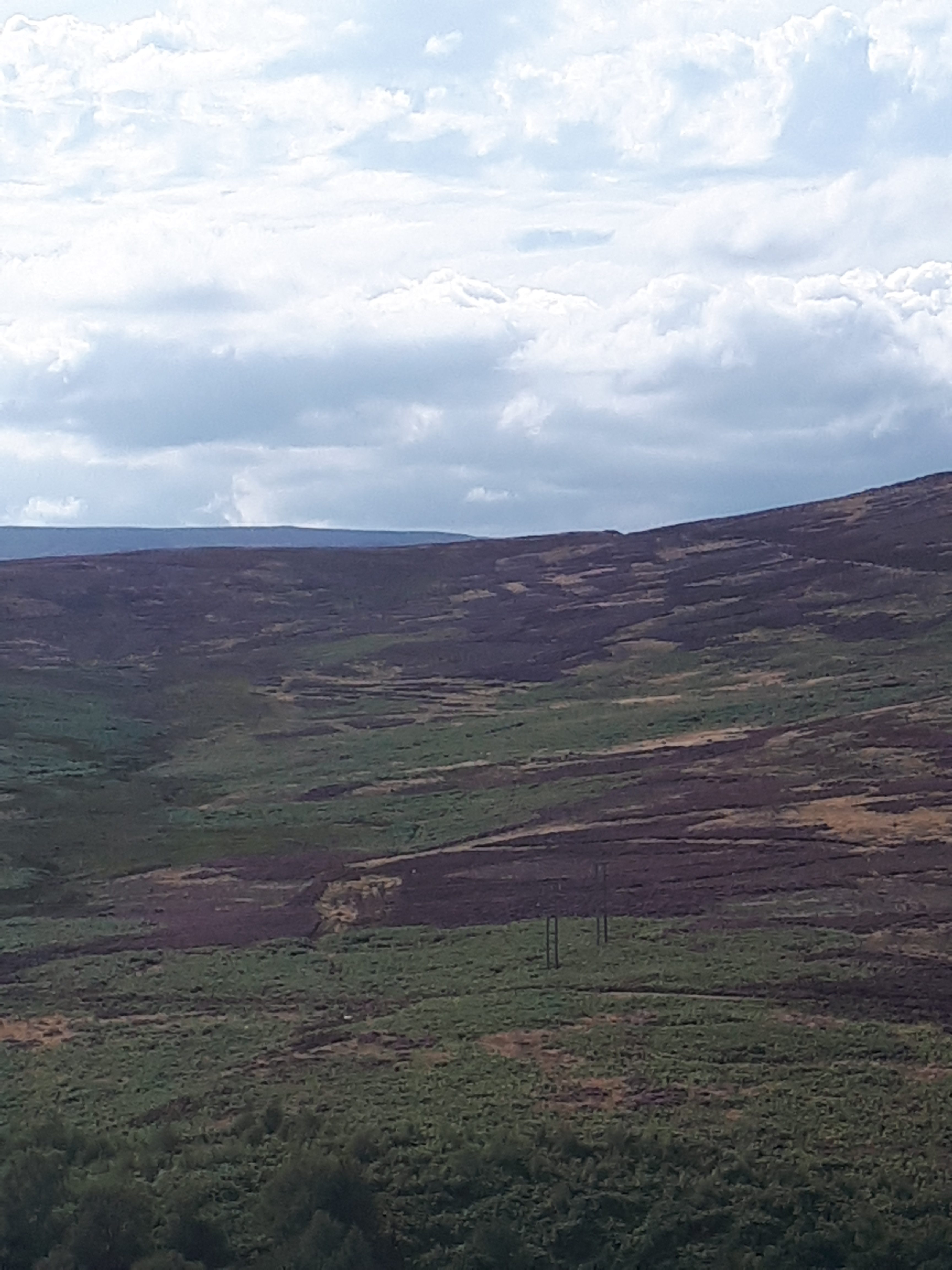
Despite the enclosures of commons that Clare saw in his lifetime, over a million hectares of common land remain in England and Wales today[ii]. More than a third of this area is designated as nationally important for nature conservation, a testimony to its history. The long use by right holders means that commons are not truly ‘wild’, but they have had a long time to develop peat soils, or the plants of ancient grasslands and heaths, and to be a familiar haven for generations of migrant birds. These old lands are, however, still places of conflict. My journey through Britain’s commons, currently being shaped into a book, have taken me to the burnt squares of heather on grouse moors, the enclosure of a common for military training, the industrial scale digging of peat in northern England, and the sheep-cropped turf of Welsh commons. Each of these has a story of carbon capture and climate change, flood control and the continual dwindling of nature; like the Fens that I crossed on my trip to Clare’s cottage, they are stories for another day, or for the longer pages of my book.

In Helpston, the small group of us who had met in the café braved the keen March wind and the drizzle to visit Swaddy Well. A red kite drifted over thorn scrub as we arrived and a flock of black sheep eyed us warily from a distance. The limestone cliffs of the abandoned quarry were still exposed, facing a shallow lake fringed with reeds, young birch trees and the spiky skeletons of last summer’s thistles. Wading into a pond, I found a few great crested newt eggs, tucked neatly under the leaves of a plant. In the shelter of a hut, we took turns at reading out the verses of Clare’s Lament. Tears pricked a little at my eyes and yet, there was a hopefulness in the battered land around us and in the kite, a species returning to Britain after years of persecution and near extinction. Swaddy Well, I found out, is more than a place on a map or the ghost of a common, it’s a reminder of how, with benevolent care, even the most mistreated places can find their way back to the wild.

Dyke looking towards Engine Farm in The Fens; a steam pump bought at the Great Exhibition in 1851 was installed here to drain one of the last shallow lakes of the landscape. H Baczkowska


[i] A Short History of Enclosure, Simon Fairlie, The Land, https://thelandmagazine.org.uk/articles/short-history-enclosure-britain

[ii] Foundation for Common Land, https://foundationforcommonland.org.uk/

The Raven and the Coal Mine

Memories of a week spent squatting land scheduled to be Britain’s first new coal mine for decades. Edited edition first published by https://mckenzieriver.org

A solitary raven has flown over my tent every morning this week. Most days I have heard the prrr-ruk call before seeing the bird’s silhouette, with its fingered wings and wedge-shaped tail. Eastwards, behind it, I’ve watched the sun rise over the mountains of the Lake District, whilst to west the Solway Firth still holds on to darkness and a few fading stars. Below the raven, my green tent nestles on waste ground between a housing estate and red-brown rocks that tumble down the sea. This week I am one of maybe two hundred environmental activists squatting land where England’s newest coal mine for decades is planned. A selection of banners, reading ‘leave it in the ground’ and ‘no new fossil fuels’, hang from our marquees, from the outdoor kitchen and our portable, composting toilets.

To the Vikings who settled north-west England, ravens were the birds of Odin, the all-father of their gods. Odin had two of the coal-black birds as companions and called them Thought and Memory; he also gave one of his eyes in exchange for knowledge of the future, and was forever troubled by what he learnt. In the here and now, when I arrived at this field by the sea, I was warned not to eat the blackberries that grow here. Underneath us are the foundations of a chemical works once infamous for the waste it leached into the sea as it produced detergents, phosphates and sulphuric acid. On top of the factory footings are years of landfill, covered over with concrete and topsoil. The brambles look innocent enough, scrambling across the broken tarmac and cement, their fruit turning from red into purple in the late summer sun. But the plants can reach their roots deep down into whatever lies beneath us and draw up the long-buried toxins. Above ground, the tangled stems mingle with low bushes of goat willow, the thistle-like flowers of knapweed, drifts of white yarrow, purple selfheal, zig-zag clover, tiny yellow bird’s foot trefoil, feral sedums and garden mint that scents the air as I walk across the site. A comma butterfly, orange wings against the green plants, searches for nectar among the flowers; someone tells me there are adders here and at night I hear tawny owls calling across the derelict ground.

The land is supposed to be private, but the fencing has been ripped open or rusted into holes and the remains of gate hinges swing empty on their posts. Every day, local children cycle past on the tracks that cross the site. I am aware that we have landed in their space, pitching our tents on their common ground, where they explore the wild edges of their town and themselves. They are curious, occasionally insulting and dare each other to speak with us. ‘Why have you all got manky hair?’ asks a stocky lad in shorts and a blue football shirt. He has a point, I think, as we emerge from our sleeping bags in the morning and head to the kitchen to find tea. We look unbrushed and scruffy, wrapped in layers against the chill breeze from the sea. Despite the taunts, a couple of protesters helped the children to dismantle discarded pallets and to make ramps for their skateboards and bikes. This afternoon I bought a couple of boys a few slices of just-baked vegan cake from the kitchen. They eyed it nervously and then smiled, nodding with satisfaction when they recognised the familiar tastes of chocolate and sugar.

In the evenings, local men and occasionally women walk their dogs among the bushes. Those who stop to chat are friendly, but say that the nearby town of Whitehaven needs the five hundred or so jobs that the coal mine will bring. On the main street there are boarded up shops and, mounted on a plinth like a memorial, an old wheel from the Haig colliery tower. When it closed in 1986, three and a half thousand jobs were shut down with it. I tell the men I understand and that I grew up in mining communities in the English Midlands. As we talk I remember how my teenage mates were frequently stopped at police roadblocks during the 1984 to ‘85 Miners’ Strike and how fifty or more riot vans at a time would line up on our village street on their way to the picket lines. The men of my mum’s family had been miners, I say, with blue-black grit engrained in the scars on their hands. She spoke of ancestors killed in underground fires and the dark coal dust her Grampa coughed up in his old age. During the Strike, boxes of food and children’s clothing would be piled on our kitchen floor on the way to the Miner’s Welfare.

I left home a year later, returning to see poverty creeping into the villages and towns, shutting down the shops and changing the way people walked. Unemployment has a listless shuffle, mingled with a kicking rage. I know there is nostalgia in the memories that the men and I share; it is not just the jobs, but the lost sense of a shared experience, and pride in hard and difficult work that for nearly two hundred years powered the furnaces of the industrialised world. Our conversations end with agreements, usually as I bend to gently tug a dog’s soft ear – yes, there should have been investment into these communities decades ago and, yes again, the current government is a shambles. I am trying to build bridges with the community that we have set up camp in, so I don’t mention what I am thinking – in a time of rising temperatures and seas, with accelerating rates of extinction, our current worries might soon be completely eclipsed. Like Odin, my days are troubled by visions of the future.

One afternoon there is a presentation about the proposed pit. The speakers are in a white marquee and we sit around them on the ground. I pick at a ribwort plantain leaf. Normally I would tell other people about how this plant can help heal our skin and is better than dock leaves for stings or insect bites. Today I remind myself to wash my hands as soon as I can, just in case it too has pulled up poison from the earth. For a moment I wonder how we broke our relationship with a small, useful plant and all of the wild lives of this Earth, and I have to remember to concentrate on the details of the new pit. Permission to build it was granted just a few weeks before, although there is still a possible legal challenge. Someone says that most of the coal will be shipped overseas for making steel. European steel works, the speakers say, are moving to cleaner, lower-carbon methods of manufacture and see coking-coal as an old and dirty technology now. There is a long discussion on how extracting this coal will ruin Britain’s commitments on carbon reduction and how the site will be fully automated, with no men underground, just machines, boring away beneath the sea bed. The world has moved on since the Haig pit and those around my home village were closed. The old days of the rattling winding gear and the pit-head camaraderie will never come back.

When I left the marquee, a warm smell of spices drifted across the camp. The evening meal would be served soon and already people were gathering with bowls and spoons in their hands. I wandered off, looking across the low bushes, grassland and decaying tarmac towards the sea. In this moment, I felt a sudden sadness for this unkempt place, where the wildness is creeping in and local people walk or play. The speakers in the marquee had said that the toxic waste and soil below our feet would be excavated and taken somewhere (no one is sure where), to make room for the buildings, haulage roads and machines of the colliery. The willows, flowers and brambles would be rooted up, the bees and the butterflies, adders and tawny owls chased away by the noise and construction work, all inconsequential in the face of trade deals and global markets. It feels to me like a kind of madness has gripped those of my species who think that any of this makes sense.

Standing on the cliff above the sea, I listen to the kee-kee of jackdaws flying to their evening roost. I watch the glinting wings of goldfinches and the dip and rise of the murmuration of starlings that gathers here at dusk. I have spent some of the last thirty years of my life blockading bulldozers and squatting houses or trees in the path of road building, quarries or airports. Yet I still have no real answers to the seemingly impossible balance between livelihoods and the rising waters, rising temperatures and growing rates of extinction. Watching the settling birds, I give myself permission to admit this uncertainty and still be here, witnessing the land, speaking aloud the names of the bird’s foot trefoil and brambles, carder bees and comma, starlings, goldfinches and jackdaws. After three decades, saying the names of the wild, acknowledging their lives, feels like the only thing that I know. As I turn and walk back towards the tents, the nearby street lights flick on in a long line. In an hour or so a full moon will rise behind the mountains, a fire will be lit in the heart of the camp and a night of songs and stories will begin. In the last moment before sunset, I hear again the deep, slow call of ravens, the birds of memory and thought.